


Can Dogs Drink Milk?
As you enjoy a nice glass of cold milk while your dog looks up at you with this big soulful eyes, you may wonder whether dogs can drink milk. Read our Holidays4Dogs article to find out.

Milk is full of vitamins and minerals as well as enzymes, protein, electrolytes and fatty acids. However, like humans, many dogs cannot digest dairy products. Before you decide to add milk to your dog’s diet, let’s look first at some of the reasons why it may not be suitable for your dog, (or you).
Lactose.
When we’re considering whether dogs can drink milk, we need to think about what’s in it. It might taste yummy to dogs, but milk contains lactose – which is the milk sugar. In order for the body to break this down, it needs a good supply of the digestive enzyme – lactase. Without this, lactose can cause intolerance which may include;
Upset tummy.
Bloating.
Wind.
Vomiting.
Loss of appetite.
Aggravation of skin and digestive issues.
If your dog already has skin or digestive issues, it would be better to avoid dairy products altogether.
Fat content.
Milk is high in fat – and, they’re saturated fats too. While saturated fats don’t affect dogs in the same way they do in humans, it’s still better to make sure your dog is not consuming too much. Excess consumption of milk can lead to high cholesterol, as well as obesity. In turn, this can impact on the dog’s overall health – an important point to consider if you’re wondering whether your dog can drink milk.
What about goat’s milk?
Because goat’s milk is full of digestible probiotics, it has been found to help with all manner of diseases in humans. These include conditions such as, liver and kidney disease, diabetes, poor digestion and gastrointestinal disease.
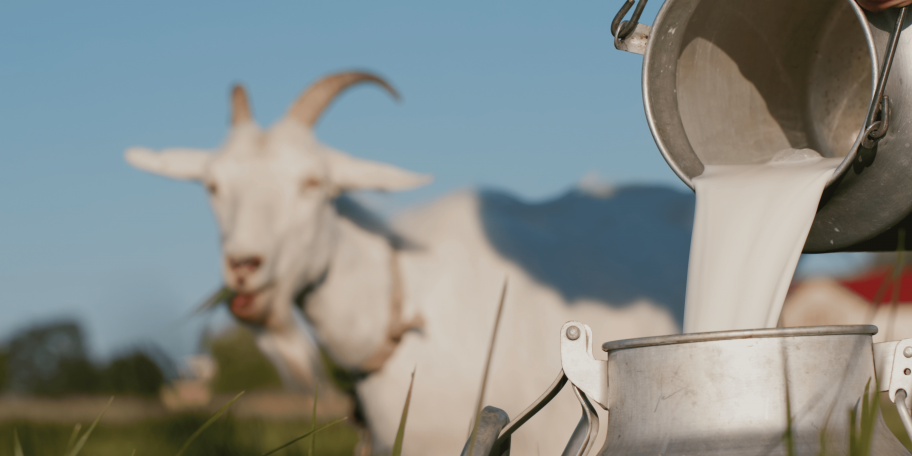
Fermented goat’s milk is even more nutritional, since the process of fermentation adds more probiotics. Research has found it to be beneficial in soothing irritable bowel, ulcers, arthritis and even more serious health conditions such as brain disorders and heart disease. Goats milk has smaller fat globules than cow’s milk making it easier to digest. However, it is not suitable for all dogs, particularly those with intolerances, allergies or those with health conditions such as pancreatitis.
The importance of quality.
It is important to check the quality of goat milk if you intend to purchase some for your dog, (or yourself). Pasteurisation will lower the quality of the milk, as will goats that have been injected with antibiotics or, fed GMO foods. While dogs can safely drink goats milk, always consider the quality of the milk.
Fermented goat’s milk needs to be from raw milk, as the good bacteria thrives when it has not been damaged by the heating process. It is possible to find fermented goat’s milk in health food stores, supermarkets or, on line. You can also purchase whole goat milk powder which is specifically made for dogs.
What about other types of milk?
Plant-based milk like soy, oat, coconut and almond milk are still quite high in fats and can cause upset tummies all the same. Soy milk in particular, is a known allergen in dogs – so be cautious if feeding this to your dog.
Are there any alternatives to milk?
Cottage cheese is tolerated well by dogs, as is yoghurt, which is thought to have a probiotic effect. However, yoghurts must be of the plain variety – no flavoured yoghurts containing sugar. You could add some fresh, or frozen fruit, like blackberries or, blueberries instead. Again, these foods should be offered as a treat and not necessarily as a regular part of a dog’s diet.
Conclusion.
Goat’s milk, in particular, seems to have the most health benefits over other types of milk – for people and dogs. However, there is no need to feed it to your dog every day. If you want to give your dog milk, it’s a good idea to dilute it with water to reduce the lactose concentration.
As a complementary and occasional addition to a dog’s diet, goat’s milk may have some health benefits. There are alternatives to giving your dog milk which may provide better nutritional value, while still being a delicious treat. Dogs can drink milk and it’s not toxic – but it’s better not to give them very much.
Our guest dogs do need to bring their own food with them for all dog stays. However, we can cater for many different types of dog’s diet and will always follow this carefully. If your dog has a special diet, such as the BARF diet, please provide details to your carer when you meet them before a dog stay.