


Tail Wagging Language Explained.
Nothing could be cuter than a pooch with a waggy tail, especially when see at as a sign of happiness. Is this always true, though? To have tail wagging language explained in more detail, dive into our Holidays4Dogs article to find out more.

Sophisticated communication.
Many animal psychologists and behaviourists are taking note of growing evidence that dogs have a much more sophisticated communication system, than ever thought before.
Dr Stanley Coren of the University of Columbia has written several books on canine behaviour. Coren suggests, dogs use their tails to communicate far more subtle signals than happiness alone.
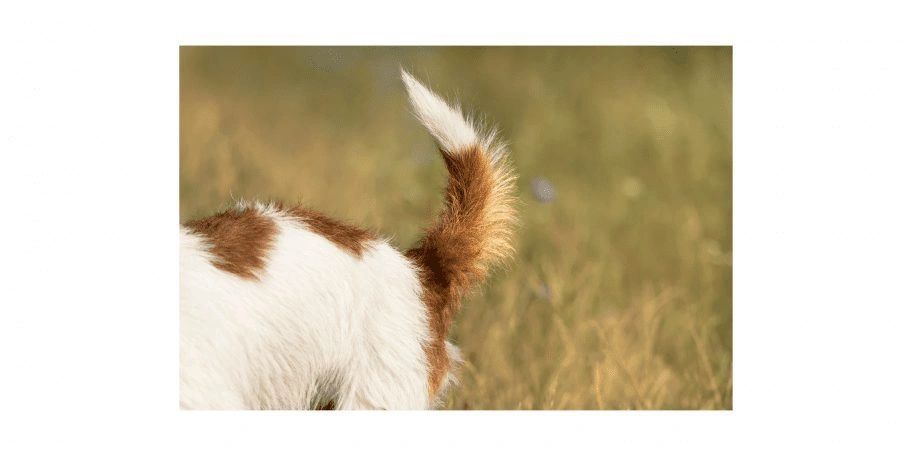
The dog’s tail certainly plays a large part in the dog’s methods of communication both to humans and to their own species.
However, it isn’t always easy to distinguish between the different signals because, different breeds have natural tail sets and some dogs have no tails at all. Dogs with damaged tails may be unable to communicate as efficiently.
- A tail carried low, or between the rear hocks, may indicate fear, or stress.
- Tails carried high, or level can be indicative that the dog is alert or on guard. This may include slow tail wagging.
- When a dog carries his tail high, often accompanied by rapid wagging from side to side – this can indicate the dog is about to flee or to fight.
- Significantly, the fact that a dog is wagging his tail does not necessarily mean they are friendly. It is, therefore, important for owners to recognise the subtle differences between tail wagging and tail carriage.
The significance of left and right tail wagging.
Scientists have discovered that a wagging tail can convey different messages. Dogs, themselves, respond in different ways to other dog’s tail wags. Studies have shown that tail wagging to the right, suggests the dog feels confident and relaxed. It also encourages approaching dogs to feel less stressed or threatened. However, tail wagging to the left, shows the dog might be apprehensive about something.
Reactions to left, or right, tail wagging, are associated with the left and right hemispheres in the dog’s brain. Just as in humans, the right side of the brain controls the left and vice versa. Thus, the direction of the wag is in direct relation to the activity on one side of the brain, or the other.
Observational research.
Observational tests were carried out by scientists at the University of Trento in Italy. The research involved 43 dogs of various breeds. The dogs were shown a digital silhouette of a dog wagging its tail, either left or right. All the dogs were fitted with monitors to measure their heart rate.
The results showed that when the dogs observed tails wagging to the left, their heart rate rose. In addition to this, they showed signs of increased anxiety and stress. Dogs were notably more relaxed to see tails wagging to the right.
Conclusion.
Dogs use their tails to communicate information to other dogs. They also use their tails to communicate their feelings to humans too – who doesn’t love seeing their dog convey their happiness with a lovely waggy tail?
However, do remember, that a wagging tail doesn’t always mean a dog is happy, or friendly.
Tails can also be an indication of ill health, so if you are at all concerned about your dog’s tail, tail carriage, or the behaviour associated with his, or her, tail – do contact your vet.